
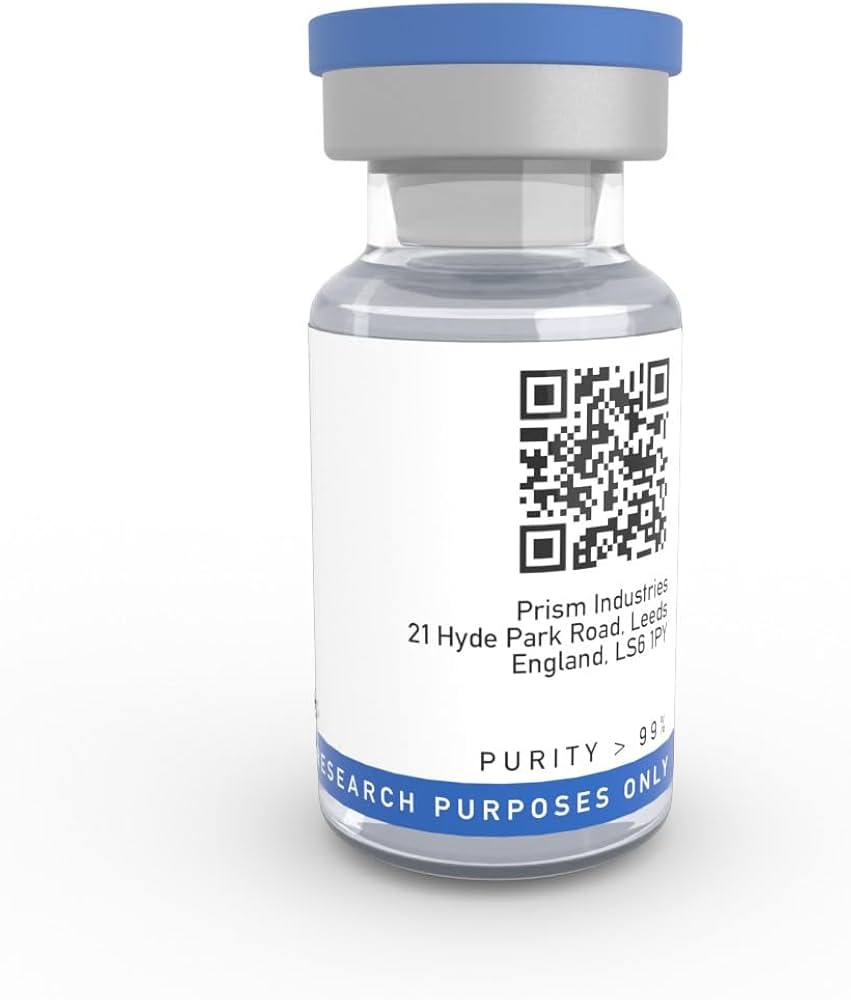

Sermorelin acetate is a synthetic analog of growth hormone–releasing hormone (GHRH) comprising the first 29 amino acids of human GHRH. It stimulates the pituitary gland to release endogenous growth hormone (GH)
By increasing GH secretion, sermorelin can raise insulin-like growth factor 1 (IGF-1) levels.
This therapy is used primarily for diagnosed growth hormone deficiency – for example, in children who fail to grow due to inadequate GH production.
In adults with confirmed GH deficiency, sermorelin may also be considered as a treatment option. However, its use in healthy older adults for “anti-aging” purposes remains unproven and is not an FDA-approved indication.
Sermorelin was originally approved in the 1990s for GH deficiency but was later discontinued as a commercial drug for business reasons (not due to safety or efficacy concerns).
It is now available as a compounded medication prepared by specialty pharmacies. Sermorelin is administered via subcutaneous injection, often once daily at night, and must be prescribed by a qualified healthcare provider. Its mechanism of action – stimulating the patient’s own GH release – offers a more physiologic alternative to direct recombinant GH injections, potentially with a different side effect profile. All use of sermorelin should be under medical supervision with appropriate monitoring of efficacy and safety parameters.
Contraindications & Precautions
Sermorelin should not be used in patients with certain conditions where the risks outweigh the potential benefits. Key contraindications and precautions include:
Hypersensitivity: Any history of allergy to sermorelin or to any of the formulation’s excipients is a contraindication to therapy.
Signs of an allergic reaction (such as rash, hives, or anaphylaxis) preclude further use.
Active Malignancy: Because growth hormone can promote cell proliferation, sermorelin is contraindicated in patients with active cancers or tumors. GH stimulation may theoretically encourage tumor growth, so this therapy is avoided in anyone with an active malignancy or a history of cancer that is not in complete remission.[8] (Patients in long-term remission should only be considered for therapy on a case-by-case basis in consultation with an oncologist.)
Intracranial Lesions: Sermorelin is not recommended for patients whose GH deficiency is caused by an intracranial tumor or lesion. Clinical trials of sermorelin did not include patients with pituitary tumors or other brain lesions causing hormone deficiencies, so safety and efficacy in this group are not established.[9] Alternative treatments should be considered in such cases.
Uncontrolled Hypothyroidism: An underactive thyroid must be managed before starting sermorelin. Untreated hypothyroidism blunts the physiological response to sermorelin, as normal thyroid hormone levels are needed for optimal GH production.
Patients should have thyroid function assessed and corrected before and during sermorelin therapy to ensure effectiveness.
Pregnancy: Use of sermorelin in pregnancy is not advised (see Pregnancy section below). Women who are pregnant or planning to become pregnant should avoid this medication unless clearly needed, due to unknown fetal risks.
Lactation: Caution is urged in breastfeeding mothers (see Pregnancy section). It is not known if sermorelin is excreted in human milk.
All patients should be evaluated by a healthcare professional to ensure none of the above contraindications or precautions apply. Sermorelin therapy is indicated only for individuals with demonstrated need (such as GH deficiency) – it is not intended for use in patients with normal GH levels, and it is legally prohibited to distribute GH or its secretagogues for anti-aging or athletic enhancement purposes. Providers will weigh the potential risks (e.g., tumor growth, metabolic effects) against benefits before initiating therapy in each patient.
Sermorelin mimics the action of endogenous GHRH on the pituitary GHRH receptors, thereby promoting the synthesis and pulsatile release of growth hormone from the anterior pituitary gland.[5] In essence, it “releases the brake” on the pituitary, causing a surge in the patient’s own GH output. Following a sermorelin dose, the increase in circulating GH leads to a corresponding rise in IGF-1 production primarily from the liver, which mediates many of the growth-promoting and metabolic effects of GH.[6] Sermorelin’s activity closely resembles that of natural GHRH, so it induces GH release in a physiologic (pulsatile) manner.[5] Notably, normal feedback mechanisms remain intact: elevated IGF-1 and GH can signal the hypothalamus and pituitary to modulate further hormone release, which may reduce the risk of extreme hormone levels. By engaging this natural endocrine loop, sermorelin therapy may support improvements in lean body mass, bone density, and other parameters in GH-deficient individuals – although responses vary and are generally less pronounced than with direct GH administration. Importantly, sermorelin is effective only if the pituitary gland is capable of producing GH; it will not elicit a response in patients with absent or nonfunctional somatotroph cells.
Contraindications & Precautions
Sermorelin should not be used in patients with certain conditions where the risks outweigh the potential benefits. Key contraindications and precautions include:
Hypersensitivity: Any history of allergy to sermorelin or to any of the formulation’s excipients is a contraindication to therapy.
Signs of an allergic reaction (such as rash, hives, or anaphylaxis) preclude further use.
Active Malignancy: Because growth hormone can promote cell proliferation, sermorelin is contraindicated in patients with active cancers or tumors. GH stimulation may theoretically encourage tumor growth, so this therapy is avoided in anyone with an active malignancy or a history of cancer that is not in complete remission.
(Patients in long-term remission should only be considered for therapy on a case-by-case basis in consultation with an oncologist.)
Intracranial Lesions: Sermorelin is not recommended for patients whose GH deficiency is caused by an intracranial tumor or lesion. Clinical trials of sermorelin did not include patients with pituitary tumors or other brain lesions causing hormone deficiencies, so safety and efficacy in this group are not established.[9] Alternative treatments should be considered in such cases.
Uncontrolled Hypothyroidism: An underactive thyroid must be managed before starting sermorelin. Untreated hypothyroidism blunts the physiological response to sermorelin, as normal thyroid hormone levels are needed for optimal GH production.
Patients should have thyroid function assessed and corrected before and during sermorelin therapy to ensure effectiveness.
Interactions
Before starting sermorelin, patients should inform their healthcare provider of all medications and supplements they are taking, as some can interfere with sermorelin’s efficacy or safety. Notable drug interactions and related considerations include:
Glucocorticoids: Concurrent high-dose glucocorticoid (corticosteroid) therapy may inhibit the GH response to sermorelin[6]. Steroids such as prednisone can suppress pituitary growth hormone release, potentially reducing sermorelin’s effectiveness. Patients on chronic corticosteroids may require dose adjustments or careful monitoring of IGF-1 levels to ensure sermorelin is having the desired effect.
Somatostatin Analogs: Medications that mimic somatostatin (the hormone that opposes GH release) can counteract sermorelin. For example, octreotide (used in acromegaly or certain tumors) or other drugs that increase somatostatin activity may blunt the GH rise from sermorelin. These combinations should generally be avoided or approached with caution, as sermorelin may be ineffective if somatostatin analogs are on board.
Thyroid Medications: The thyroid status of the patient significantly influences sermorelin’s activity. As noted, untreated hypothyroidism will interfere with sermorelin’s effects.
Conversely, starting or stopping thyroid hormone replacement could alter the growth hormone response. While levothyroxine itself is not a direct antagonist to sermorelin, thyroid levels need to be stable. In addition, anti-thyroid drugs (e.g., propylthiouracil) that induce a hypothyroid state may diminish sermorelin’s efficacy.
Close coordination of thyroid treatment with sermorelin therapy is recommended.
Insulin and Blood Sugar: GH can antagonize insulin’s actions, so diabetics on insulin or oral hypoglycemics should be closely monitored when initiating sermorelin. Although not a direct “drug-drug interaction,” increased GH/IGF-1 levels may raise blood glucose. Adjustments to diabetes medications might be needed to maintain glycemic control. Patients should report significant changes in blood sugar to their provider.
Other Medications: Certain central nervous system medications used in GH stimulation tests – for example, dopamine agonists (like L-Dopa) or arginine – can affect GH release. While these are typically only relevant in diagnostic settings, any drug affecting pituitary function or hormone levels could theoretically impact sermorelin therapy. Nonsteroidal anti-inflammatory drugs (NSAIDs) such as high-dose aspirin or indomethacin have been reported to alter GH release in some contexts
, though this is more pertinent to GH stimulation testing than chronic therapy.
In summary, any medication that significantly alters pituitary-hypothalamic function or hormonal balance should be brought to the attention of the prescribing practitioner. Lab test interactions: Note that sermorelin can cause transient changes in certain lab values – for instance, it may increase serum levels of markers like inorganic phosphorus or alkaline phosphatase.[9] Healthcare providers and laboratory personnel should be aware the patient is on sermorelin, so that lab results are interpreted appropriately. As always, patients are advised not to start or stop any other prescription drug, over-the-counter product, or supplement without consulting their healthcare provider during sermorelin therapy.
| QTY | SM 050, SM 010 |
|---|
Be the first to review “Sermorelin Acetate”
Related products
Weight Loss Research Peptides
Weight Loss Research Peptides
Weight Loss Research Peptides
Weight Loss Research Peptides
Weight Loss Research Peptides
Weight Loss Research Peptides
Weight Loss Research Peptides
Weight Loss Research Peptides
Reviews
There are no reviews yet.