

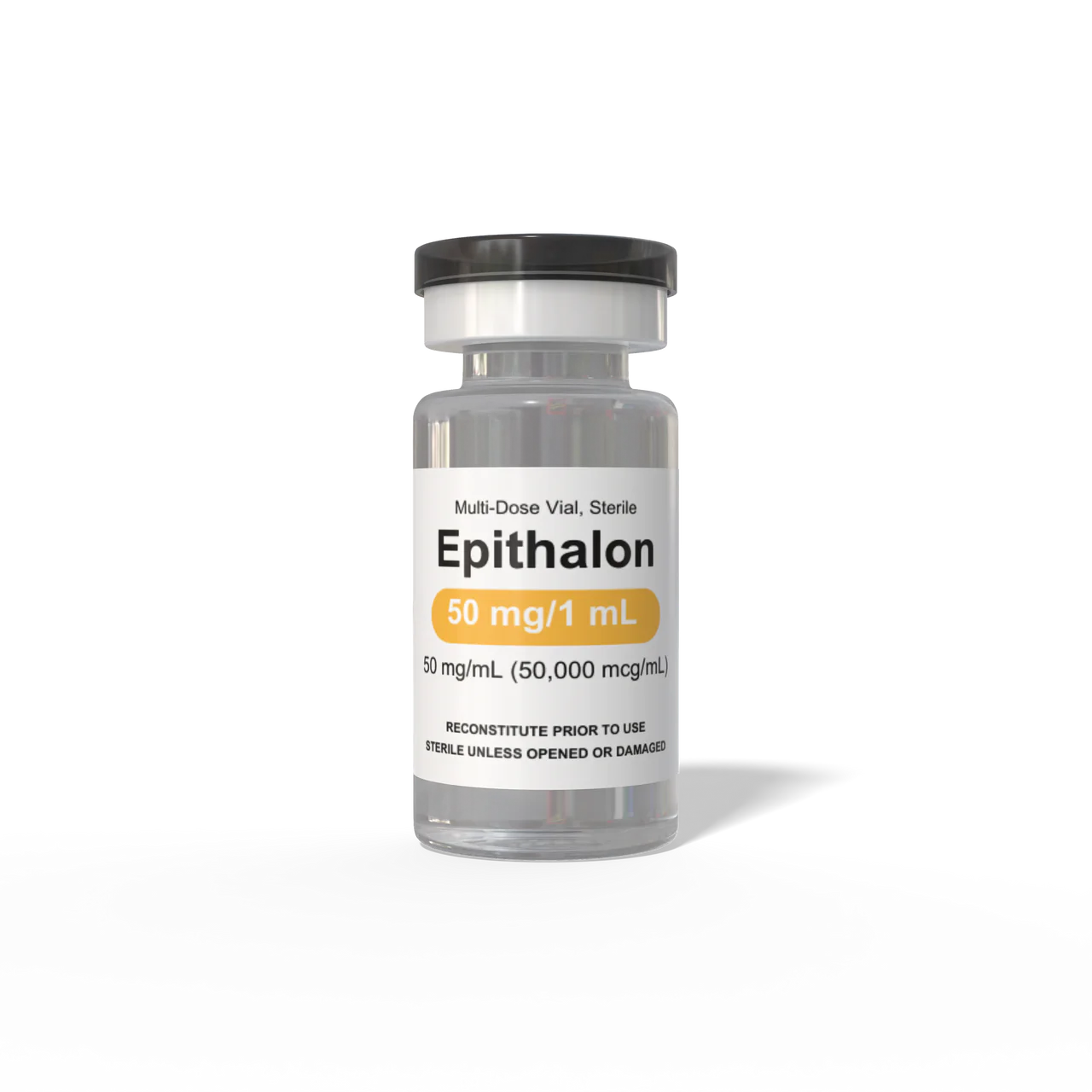
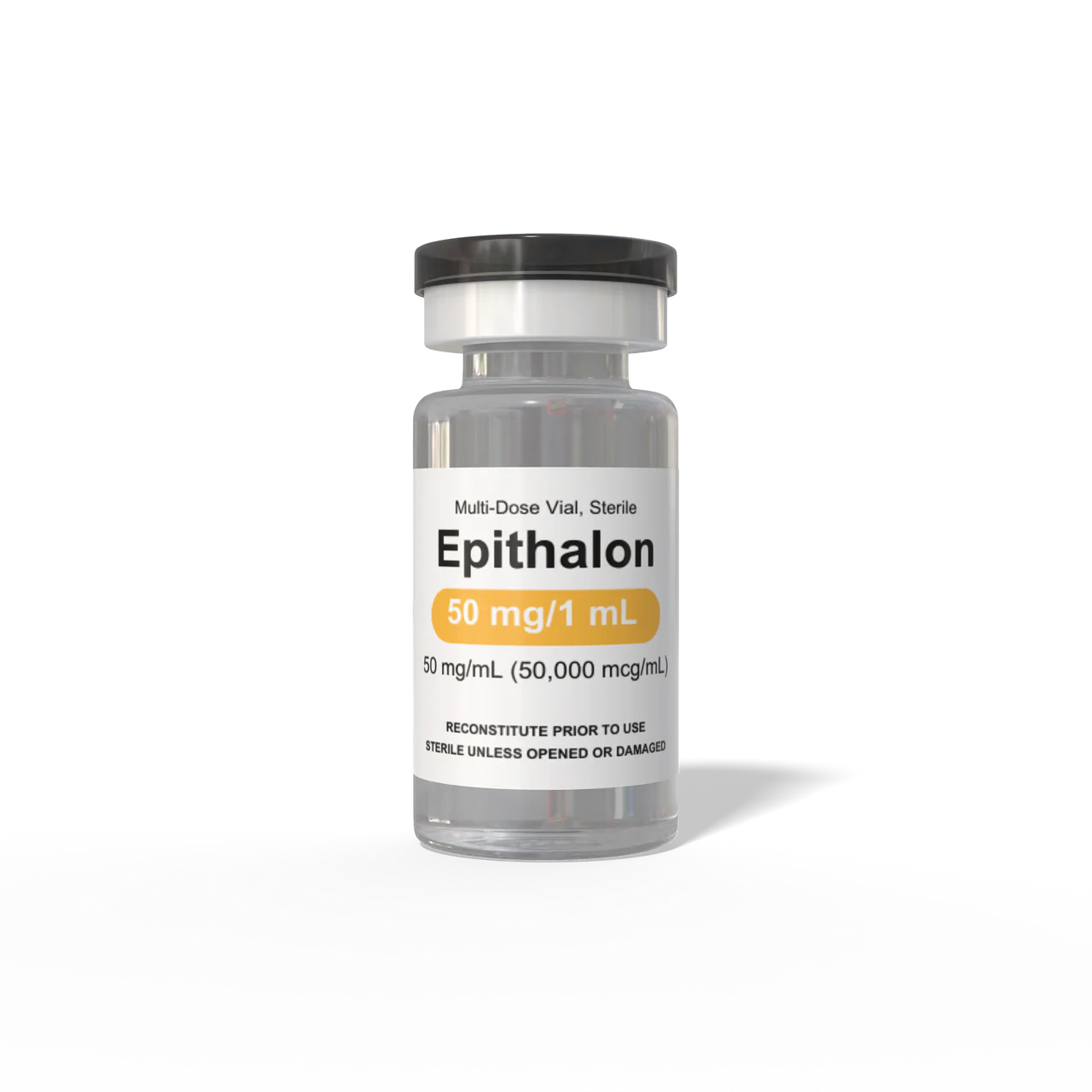


Epitalon

Price range: $30.30 through $89.30
Epitalon
Epithalon (also known as Epitalon or Epithalone) is the synthetic version of the polypeptide Epithalamin, which is naturally produced in the pineal gland. The main purpose of Epitalon is to boost the production of telomerase, the protective sections of our DNA. Telomeres allows the body to generate new cells and renew old ones. As we age, telomerase production diminishes, leading to decreased cell health and replication efficiency.
Epitalon also influences metabolic regulation, enhances the sensitivity of the hypothalamus to its natural hormonal signals, balances the anterior pituitary’s function, and regulates gonadotropin and melatonin levels within the body.
Epitalon
Epithalon (also known as Epitalon or Epithalone) is the synthetic version of the polypeptide Epithalamin, which is naturally produced in the pineal gland. The main purpose of Epitalon is to boost the production of telomerase, the protective sections of our DNA. Telomeres allows the body to generate new cells and renew old ones. As we age, telomerase production diminishes, leading to decreased cell health and replication efficiency.
Epitalon also influences metabolic regulation, enhances the sensitivity of the hypothalamus to its natural hormonal signals, balances the anterior pituitary’s function, and regulates gonadotropin and melatonin levels within the body.
Science-Backed Research
- Increase human lifespan
- Retinal Degeneration repair
- Delay/Prevent age-related diseases
- Improve skin health and appearance
- Heal deteriorated/injured muscle cells
- Boost energy levels
Epithalon is a synthetic tetrapeptide studied for its potential to extend cell lifespan by activating telomerase, reduce oxidative stress, and support cellular repair. Research also explores its neuroprotective effects and influence on age-related hormonal regulation in laboratory test subjects.
Epithalon, a synthetic tetrapeptide composed of Ala-Glu-Asp-Gly, is recognized for its potential in modulating cellular and molecular aging processes in non-human test subjects. It is primarily known for influencing telomere maintenance and elongation, through the activation of telomerase, an enzyme that extends the lifespan of cells.
In research settings, Epithalon has demonstrated the ability to enhance mitochondrial function, potentially improving energy production within cells. Additionally, its antioxidant properties are believed to mitigate oxidative stress, contributing to cellular stability. This peptide has also been investigated for its neuroprotective effects, including promoting the repair of neural tissue and supporting synaptic function in animal models. Furthermore, Epithalon’s modulation of the hypothalamic-pituitary-gonadal axis has prompted exploration of its potential role in regulating age-related hormonal changes in research subjects. Collectively, these properties make Epithalon a significant peptide in studies focusing on longevity and cellular regeneration in laboratory environments.
Summary of Characteristics
| Characteristic | Details |
|---|---|
| Chemical sequence of amino acids | Ala-Glu-Asp-Gly |
| Molecular Formula | C14H22N4O9 |
| Molecular Weight | 390.36 g/mol |
| Other Known Titles | Epithalamin, Epithalon, AETG, Epitalon |
| QTY | ET 10MG, ET 50MG |
|---|
Be the first to review “Epitalon”
Related products


Skin & Hair

Skin & Hair



Skin & Hair
Skin & Hair
Reviews
There are no reviews yet.