

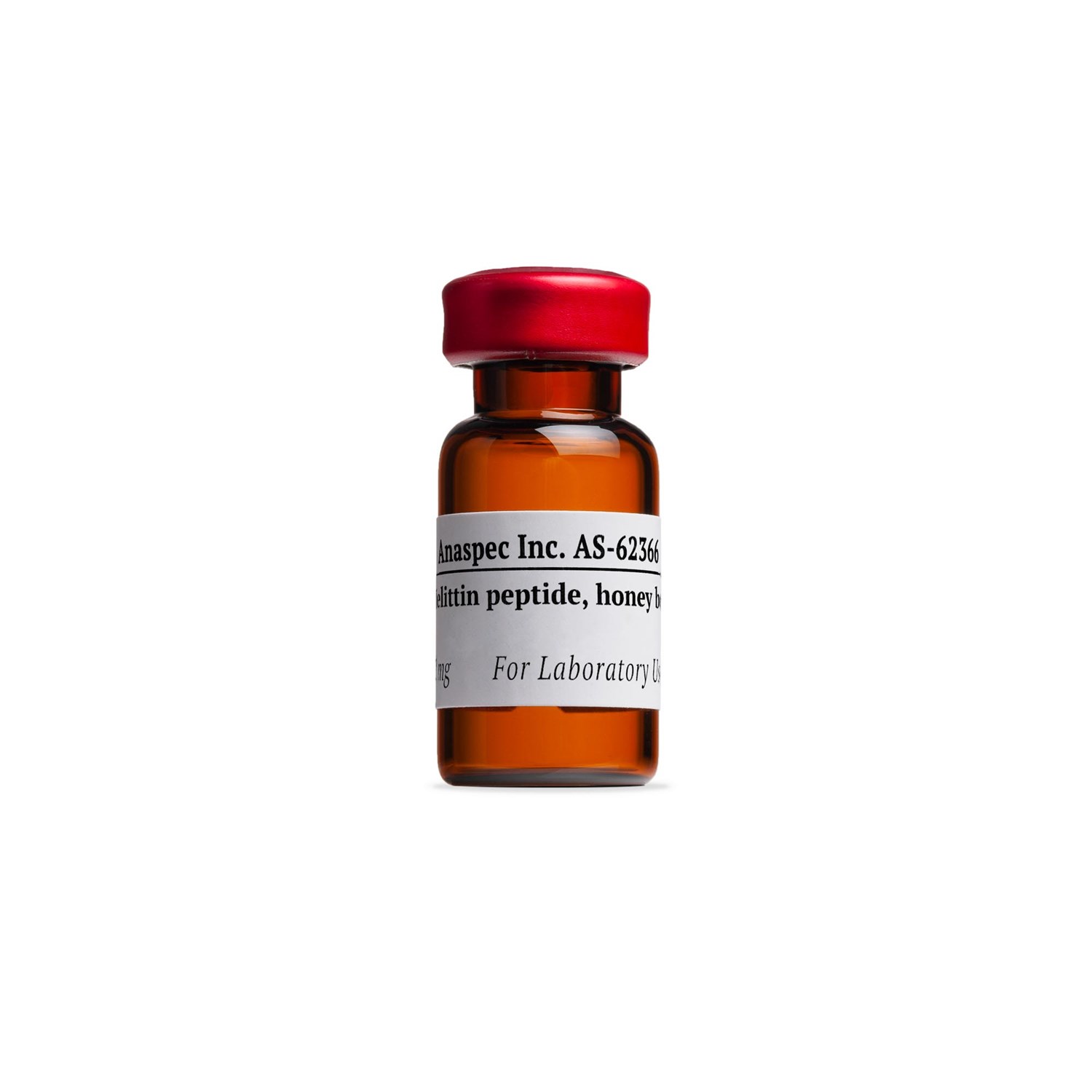
Melittin, a 26-residue bee venom peptide, is known to induce murine antibodies specific for its hydrophilic C-terminus of residues 20 to 26 and T-cell responses specific for its hydrophobic mid-region (residue 11 to 19). This peptide is an anti-inflammatory agent; it inhibits the Lyme disease spirochete.
Benefits
- Anti-Cancer Properties: Melittin induces apoptosis (cell death) in various cancer types, including breast, melanoma, and pancreatic cancers, by disrupting their cell membranes. It has shown potential to increase the effectiveness of radiation and chemotherapy.
Anti-Inflammatory & Arthritis Treatment: It is highly effective in treating immune-related diseases and chronic inflammation, particularly arthritis, by acting as a strong anti-inflammatory agent.
- Antimicrobial & Antiviral Action: It acts against germs, fungi, and bacteria, including methicillin-resistant Staphylococcus aureus (MRSA).
- Pain Relief (Analgesic): Melittin helps reduce pain and inflammation-related chronic conditions.
- Skin Care: Used in the cosmetics industry for its ability to reduce wrinkles and improve photo-damaged skin.
Specifications
| Chemistry | |
| Sequence one letter code |
|
|---|---|
| Sequence three-letter code |
|
| CAS registry number |
|
| Molecular Formula |
|
| Molecular Mass/ Weight |
|
| Modification | |
| Conjugation |
|
| Quantity & Purity | |
| Purity |
|
| Storage & stability | |
| Form |
|
| Storage Conditions |
|
| Activity | |
| Biomarker Target |
|
| Research Area |
|
| Sub-category Research Area |
|
| Usage |
|
| Source | |
| Source / Species |
|
Be the first to review “Melittin, honey bee”
Related products
-11%
Weight Loss Research Peptides
Original price was: $37.30.$33.30Current price is: $33.30.
-9%
Weight Loss Research Peptides
Original price was: $33.30.$30.30Current price is: $30.30.
-4%
Weight Loss Research Peptides
Original price was: $73.30.$70.30Current price is: $70.30.
-9%
Weight Loss Research Peptides
Original price was: $33.30.$30.30Current price is: $30.30.
-3%
Weight Loss Research Peptides
Original price was: $67.30.$65.30Current price is: $65.30.
-7%
Weight Loss Research Peptides
Original price was: $43.30.$40.30Current price is: $40.30.
-9%
Weight Loss Research Peptides
Price range: $30.30 through $100.30
This product has multiple variants. The options may be chosen on the product page
Reviews
There are no reviews yet.