

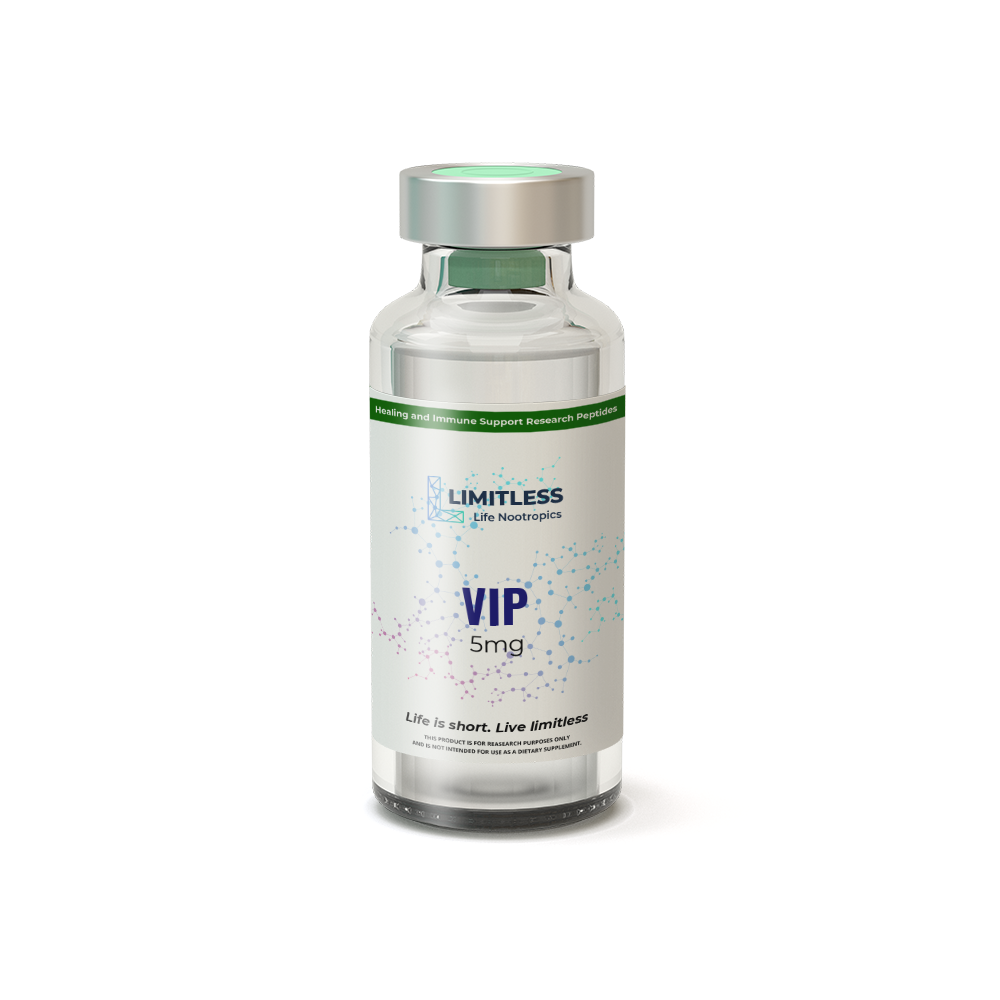
VIP 5mg
Original price was: $33.30.$31.30Current price is: $31.30.
VIP is produced in many tissues of vertebrates, including the gut, pancreas, cortex, and suprachiasmatic nuclei of the hypothalamus in the brain. VIP stimulates contractility in the heart, causes vasodilation, increases glycogenolysis, lowers arterial blood pressure, and relaxes the smooth muscle of the trachea, stomach,h and gallbladder.
Vasoactive intestinal peptide, also known as vasoactive intestinal polypeptide or VIP, is a peptide hormone that is vasoactive in the intestine. VIP is a peptide of 28 amino acid residues that belongs to a glucagon/secretin superfamily, the ligand of class II G protein–coupled receptors. VIP is produced in many tissues of vertebrates, including the gut, pancreas, cortex, and suprachiasmatic nuclei of the hypothalamus in the brain. VIP stimulates contractility in the heart, causes vasodilation, increases glycogenolysis, lowers arterial blood pressure, and relaxes the smooth muscle of the trachea, stomach, and gallbladder. In humans, the vasoactive intestinal peptide is encoded by the VIP gene. VIP has a half-life (t½) in the blood of about two minutes.
VIP Benefits
- Immune Modulation & Anti-inflammatory Effects: Studies suggest that VIP may help to balance immune responses and reduce excessive inflammation, which could be relevant in chronic autoimmune conditions.
- Respiratory Health: VIP is known to act as a bronchodilator, which can help relax airways and potentially improve circulation and oxygenation.
- Gastrointestinal Support: Research indicates that VIP can influence intestinal motility, smooth muscle activity, and secretions, which may be beneficial in managing digestive disorders.
- Neurological Protection: VIP has been studied for its potential neuroprotective properties and its role in neuroinflammation and cognitive function.
- Cardiovascular & Metabolism: VIP is associated with vasodilation, which can improve blood flow and potentially influence blood pressure and metabolic factors.
- Circadian Rhythm & Repair: VIP is thought to play a role in regulating internal body clocks and may support tissue repair processes by addressing oxidative stress.
Be the first to review “VIP 5mg”
Related products
Weight Loss Research Peptides
Weight Loss Research Peptides
Weight Loss Research Peptides
Weight Loss Research Peptides
Weight Loss Research Peptides

Weight Loss Research Peptides
Weight Loss Research Peptides
Weight Loss Research Peptides
Reviews
There are no reviews yet.