

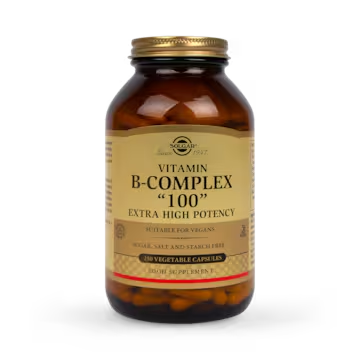
Solgar Vitamin B-Complex 100 Extra High Potency 250 Vegi Capsules
Price range: $9.30 through $11.30
Solgar Vitamin B-Complex 100 Extra High Potency 250 Vegi Capsules
Vitamin B12?
Vitamin B12 is a nutrient that your body doesn’t make, so you have to get it from animal products, such as meats, dairy, and eggs, or from supplements. B12 is important because it keeps your nerve and blood cells healthy. The vitamin is water-soluble, meaning your body expels any excess through your pee. While B12 can be stored in your liver for up to five years, you can become deficient (lacking) in it if you don’t get enough. Since vitamin B12 contains the mineral cobalt, it’s sometimes known as cobalamin.
Benefits of B12
Vitamin B12 does a lot of important things for your body. It helps create your DNA and red blood cells, for example. Your body also needs B12 for the development of your central nervous system (your brain and spinal cord). It also helps keep your hair, nails, and skin healthy.
Bone and red blood cell health
You need B12 to make healthy red blood cells, white blood cells, and platelets. Every day, about 1% of your oldest red blood cells are destroyed and replaced. New red blood cells need vitamin B12 and folate (vitamin B9) to grow and develop. If you’re lacking these vitamins, making DNA is hard, causing the immature red blood cells to die. This leads to anemia.
Although several studies show a link between depression and low B12 levels, there’s no evidence that increasing the levels of B12 can help ease depression symptoms. But it could be helpful to screen people for B12 deficiency in advance and give them B12 supplements to delay or prevent the onset of depression. More research is needed to confirm this.
Solgar Vitamin B-Complex 100 Extra High Potency 250 Vegi Capsules
Vitamin B12?
Vitamin B12 is a nutrient that your body doesn’t make, so you have to get it from animal products, such as meats, dairy, and eggs, or from supplements. B12 is important because it keeps your nerve and blood cells healthy. The vitamin is water-soluble, meaning your body expels any excess through your pee. While B12 can be stored in your liver for up to five years, you can become deficient (lacking) in it if you don’t get enough. Since vitamin B12 contains the mineral cobalt, it’s sometimes known as cobalamin.
Benefits of B12
Vitamin B12 does a lot of important things for your body. It helps create your DNA and red blood cells, for example. Your body also needs B12 for the development of your central nervous system (your brain and spinal cord). It also helps keep your hair, nails, and skin healthy.
Bone and red blood cell health
You need B12 to make healthy red blood cells, white blood cells, and platelets. Every day, about 1% of your oldest red blood cells are destroyed and replaced. New red blood cells need vitamin B12 and folate (vitamin B9) to grow and develop. If you’re lacking these vitamins, making DNA is hard, causing the immature red blood cells to die. This leads to anemia.
Although several studies show a link between depression and low B12 levels, there’s no evidence that increasing the levels of B12 can help ease depression symptoms. But it could be helpful to screen people for B12 deficiency in advance and give them B12 supplements to delay or prevent the onset of depression. More research is needed to confirm this.
If you have a very low level of B12, you may be prone to hyperpigmentation (dark spots) on your skin, vitiligo (light patches on your skin), mouth ulcers, eczema, and acne. On the other hand, too much B12 in your body can also give you vitiligo, mouth ulcers, eczema, and acne.
B12 deficiency is associated with hair loss, but there’s not enough evidence to show that taking B12 supplements will help hair grow back.
If you have too little B12 in your body, your nails might turn brown-gray or bluish. This should change when you bring your B12 levels to normal. There are no studies showing that taking B12 if your levels are normal will help your nails grow stronger or longer.
How to Get Vitamin B12
Making sure you get the right amount of vitamin B12 depends on things such as your age, eating habits, health conditions, and the medications you take.
- Infants up to age 6 months: 0.4 micrograms
- Babies aged 7-12 months: 0.5 micrograms
- Children aged 1-3 years: 0.9 micrograms
- Kids aged 4-8 years: 1.2 micrograms
- Children aged 9-13 years: 1.8 micrograms
- Teens aged 14-18 years: 2.4 micrograms
- Adults (19+ years): 2.4 micrograms
- Pregnant: 2.6 micrograms
- Breastfeeding: 2.8 micrograms
Vitamin B12 foods
You can get vitamin B12 from animal products, which have it naturally, or from foods that have been fortified with it. These include:
- Meat
- Fish
- Poultry
- Milk
- Eggs
- Fortified breakfast cereals
- Fortified breads
- Fortified nutritional yeasts
- Fortified plant milks
If you follow a vegan diet (meaning you don’t eat any animal products, including meat, milk, cheese, and eggs) or you’re a vegetarian who doesn’t eat enough eggs or dairy products, you could be lacking in vitamin B12. You can add fortified foods to your diet or take supplements to meet this need.
If your B12 levels are already normal, getting a B12 injection for extra energy or weight loss isn’t going to help. No studies have shown that extra B12 offers any benefits in these areas.
Vitamin B12 Deficiency
Your body stores 1,000-2,000 times as much vitamin B12 as you’d eat in a day, so it can take many years to see symptoms of vitamin B12 deficiency. If you think you might be low on B12, ask your doctor about getting a blood test to check your vitamin B12 level. You’re more likely to have vitamin B12 deficiency if you have a medical condition where your body can’t absorb B12 or you follow a strict vegan diet.
Vitamin B12 deficiency symptoms
- Weakness, tiredness, or lightheadedness
- Heart palpitations and shortness of breath
- Pale skin
- A painful, smooth, inflamed tongue (glossitis)
- Digestive issues
- Bluish or gray-brown nails
- Loss of appetite
What happens if your vitamin B12 deficiency is left untreated?
If you don’t treat your B12 deficiency, it can lead to more severe neurological problems, including:
- Problems walking or speaking
- Vision loss
- Numbness or tingling
- Muscle weakness
- Difficulty remembering things
- Depression or mood swings
Treating vitamin B12 deficiency
Treatment depends on the reason for your low levels of B12.
Several autoimmune diseases can make it harder for your body to absorb B12, including pernicious anemia. It’s when your body can’t make intrinsic factor, the protein needed to absorb B12. Another autoimmune disease, atrophic gastritis, thins the lining of your stomach and prevents your body from making enough hydrochloric acid and intrinsic factor you need to absorb B12. To treat them, you’ll probably need shots of vitamin B12 at first, and then you may need to keep getting shots, or taking high doses of a supplement by mouth or nasally. Immune system disorders, such as Graves’ disease or lupus, are also linked to vitamin B12 deficiency.
Vitamin B12 and Pregnancy
Are you pregnant, on a vegan or vegetarian diet, and plan to only breastfeed your baby? Talk to your doctor to ensure that you get enough vitamin B12 to keep your baby healthy.
Without enough vitamin B12, your baby could have growth delays and not thrive the way they should. B12 is very important for brain and spinal development.
Vitamin B12 Overdose
There’s no established upper level for B12 because even if you take large amounts of it, your body won’t store more than it needs to. One study had people on doses as high as 2,000 micrograms with no side effects.
However, there have been cases of people breaking out into acne and rosacea and having heart palpitations after taking very high doses of vitamin B12, usually by injection. A 2020 study found that the death rate among people with the highest levels of B12 in their bodies was almost twice as high as that of people with the lowest levels of B12. The researchers weren’t sure why.
Vitamin B12 FAQs
Which food is highest in B12?
Beef liver. A 3-ounce serving of cooked beef liver has 70.7 micrograms of vitamin B12. That’s 2,944% of your recommended daily allowance of B12! In general, organ meats, like kidneys or livers from animals, are very high in B12. If you don’t like organ meats, your next best bet is clams. Three ounces of cooked clams without shells provide 17 micrograms or 708% of your recommended daily allowance of B12.
Stage I. Low serum level. You have low levels of vitamin B12 in your blood. You have no B12 deficiency symptoms.
Stage II. Low cell store. You have low levels of B12 in your cells.
Stage III. Biochemical deficiency. You have higher levels of the chemicals homocysteine and methylmalonic acid and reduced DNA synthesis, leading to neurological and psychological symptoms, such as confusion, mood swings, problems walking or talking, and irritability.
Stage IV. Clinically evident deficiency. You get macrocytic anemia or very large red blood cells, which don’t work properly. You usually feel tired and weak. You also have the neurological and psychological symptoms of stage III.
| QTY | 50mg, 100mg |
|---|
Be the first to review “Solgar Vitamin B-Complex 100 Extra High Potency 250 Vegi Capsules”
Related products


Immune-Boosting Peptides System
Immune-Boosting Peptides System
Immune-Boosting Peptides System
Immune-Boosting Peptides System
Immune-Boosting Peptides System
Reviews
There are no reviews yet.